
International Organizations Clinic
The aim of this clinic is to assist students in developing and applying inter-disciplinary perspectives to the practice of law beyond the State, with particular emphasis on the practice of international organizations. Through weekly seminars, students are introduced to legal, political and regulatory theories informing the norms, policies and practice of international organisations. They also work directly with international organizations to provide legal and policy advice on cutting-edge issues, including data governance and risk frameworks for digital development projects.
Over the years, the Clinic has worked with the World Health Organization, the World Bank Inspection Panel, the OECD, UNDP, UNICEF, and the World Bank’s Office of Legal Vice Presidency. In addition, students in the Clinic produced several publicly-available studies, including on the International Monetary Fund’s engagement with social protection issues, due diligence practice of the International Finance Corporation, and digital risk assessment frameworks for projects of the Asian Development Bank.
data, law, and ocean governance
Upcoming: On June 10, 2026, Professor Fisher will take part in a panel on Seabed Mining at a Crossroads: A Discourse on Current Legal and Policy Perspectives, organized by the New York City Bar.
In 2025, the Clinic began a multi-year project to examine the role of large-scale ocean data infrastructures in the governance of oceans. Students studied closely the Global Ocean Observation System and Ocean Biodiversity Information System (OBIS)(coordinated by and operated under, respectively, the UNESCO-Intergovernmental Oceanographic Commission) and ocean biodiversity data assembled by the Group on Earth Observations Biodiversity Observation Network (GEO BON), Their analysis focused on the types of data that were generated and aggregated (and which data were missing); formats, standards, and protocols that regulated who could contribute ocean observations and how (and whose inputs were excluded or marginalized), what representations of the interconnected ocean emerged through these data infrastructures, how such representation influenced different aspects of ocean governance and with what implications for the concerns, interests, and wellbeing of different groups and constituencies. The students also analyzed the UN Convention on the Law of the Sea, the Convention on Biological Diversity, constitutive documents of the Regional Fisheries Management Organisations, and the data policy of the World Meteorological Organization, asking similar questions.
On the basis of their research, the students prepared a series of draft primers directed at law- and policy-makers, data managers, and the public, explaining how law and data collectively, but with frictions and tensions, shape how “ocean” is represented as a regulatory object, whose interests and perspectives dominate in such representations and whose are marginalized, and how the resulting representation of “the ocean” subsequently affects the development, interpretation, and implementation of laws and policies.
One of the primers, authored by LLM’26 Marha Fathma and LLM’26 Sarah Ziwamil is forthcoming in UCLA Indigenous Peoples' Journal of Law, Culture, and Resistance.
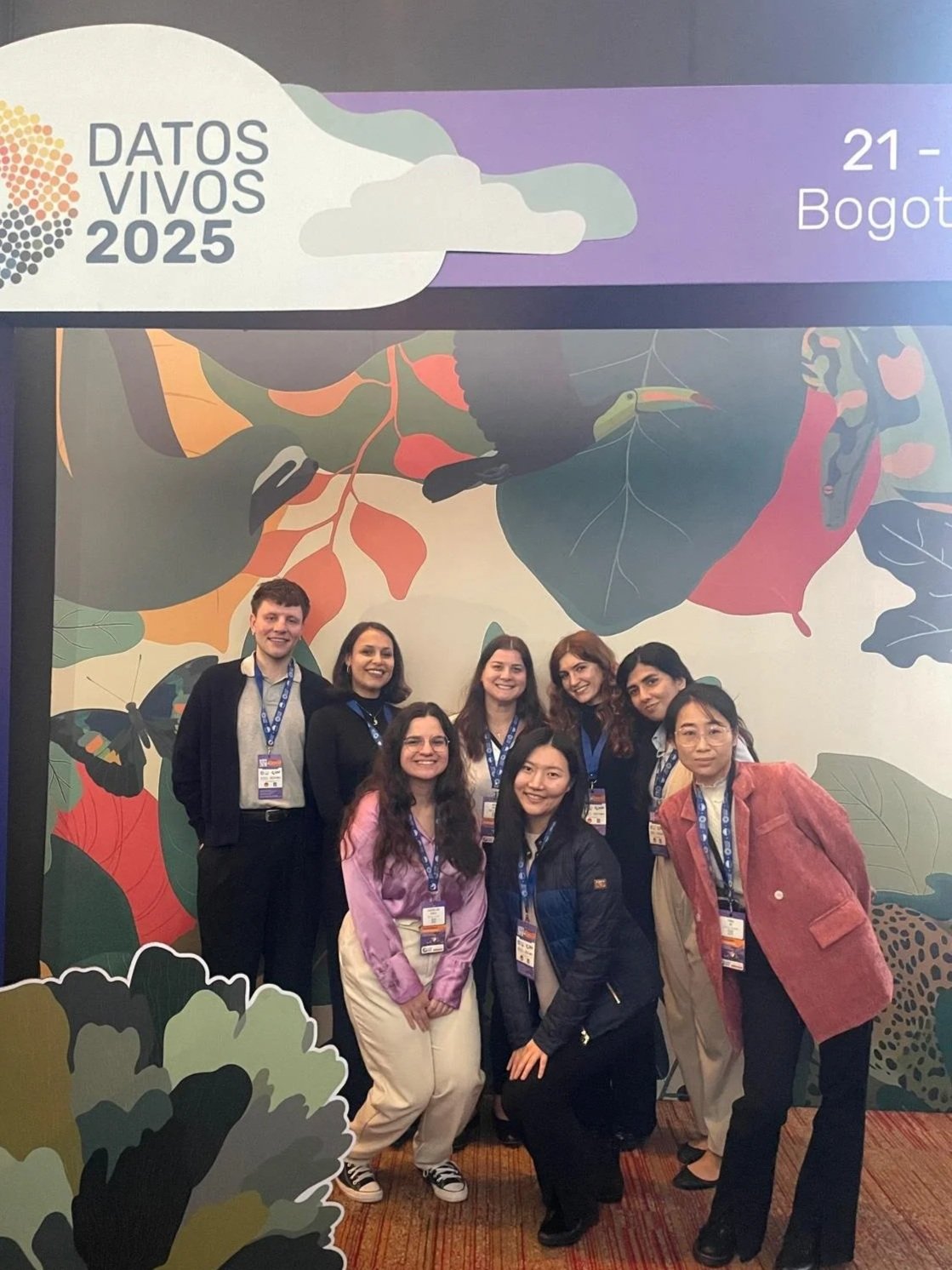
Clinic Students Attend “Living Data 2025”
The students had an opportunity to take part in the Biodiversity Data Conference (Datos Vivos 2025) in Bogota, Colombia, where they attended panels and discussions, as well as interviewed scientists, designers, maintainers, and managers of data infrastructures, and staff of the Intergovernmental Oceanographic Commission.
International Organizations and Digital Development
Assessing & Mitigating Risks in Projects of Multilateral Development Banks
Over a period of several years, under the direction of Angelina Fisher, Gráinne de Búrca, and Victoria Adelmant, students in the International Organizations Clinic have studied “digital transformation” projects funded by major development banks.
Among other issues, the Clinic has explored the idea of ‘digital risk’ – what is digital risk and how is it different from the environmental, social and financial risks typically considered by an international organisation? How does digital risk factor into the developmental impact of a project funded by a multilateral development bank? How should a multilateral development bank approach and devise, assessment mitigation and accountability measures for digital risks?
In 2025, the Clinic released a report on Digitalization as Development: Rethinking the IFC’s Risk Assessment and Remedy Frameworks in the Context of Digital Technologies
Full Report available here.
This report is a product of this multi-year effort. It zeroes in on the International Finance Corporation (IFC), an institution of the World Bank Group focused on private sector finance. Drawing on publicly available documents, the report provides a close analysis of the IFC’s frameworks for assessing risk and benefits of financed projects. It argues that these frameworks are no longer fit-for-purpose in the context of “digital transformation” projects. The report proposes new directions for thinking about investments with digital components.
Clinic Submission for the Asian Development Bank’s Safeguards Policy Review
In 2022, the Clinic participated in public consultations on the Asian Development Bank’s Safeguards Policy Review. The Clinic’s written submission on consideration of digital risk in the Safeguards Policy Review is here.
Risks from Digital Infrastructure Projects - the case of ADB
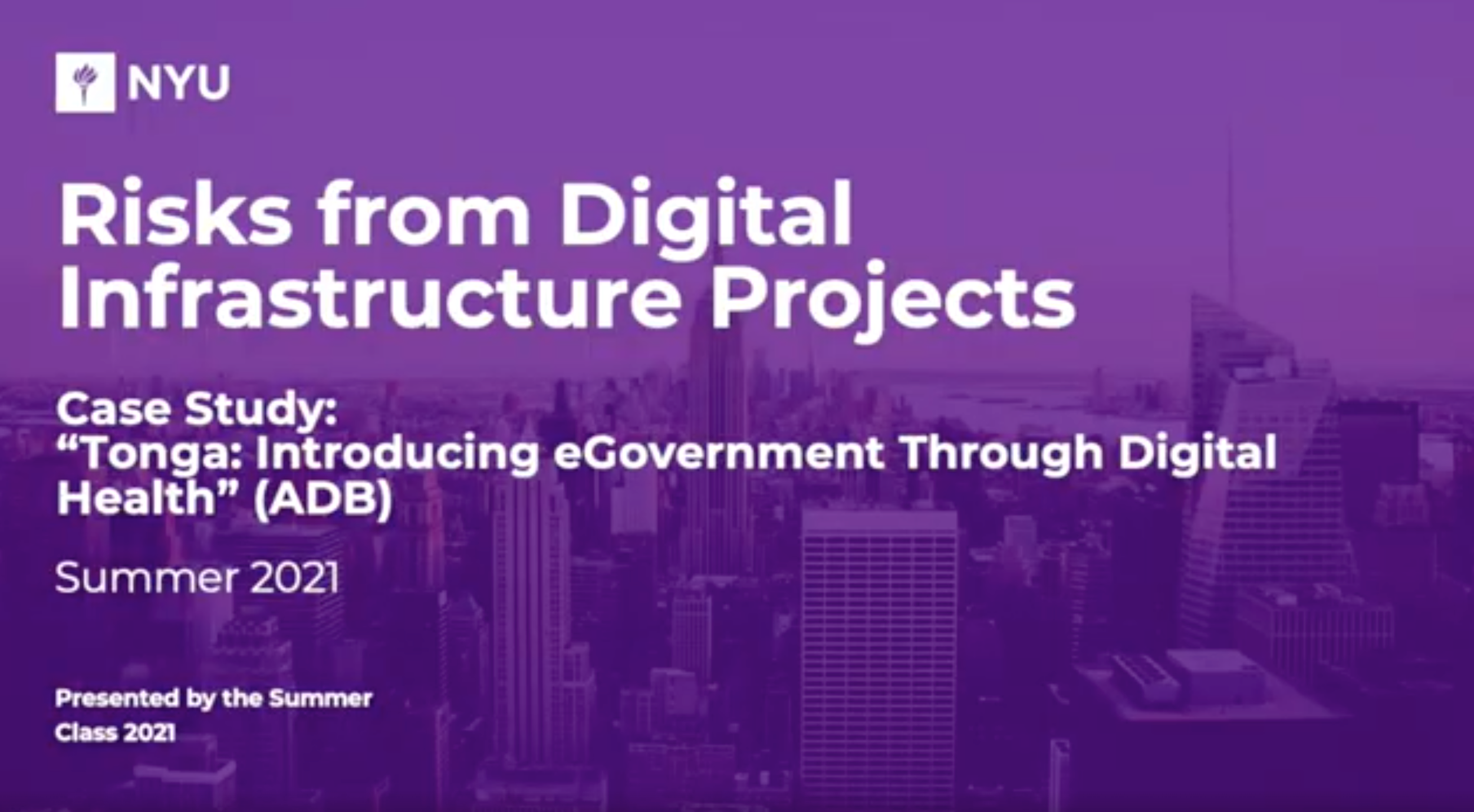
In Summer 2021, the Clinic students conducted an in-depth case study of an e-health project in Tonga, funded by the Asian Development Bank. Drawing on the insights from infrastructural studies and the InfraReg Project of the Institute for International Law and Justice, the students presented to the ADB a framework for assessing and mitigating risk in digital development projects. A video of the students’ presentation is available here.
Open Letter to World Bank Group Executive Board Members
Legal Issues Concerning the IFC/MIGA Draft Approach to Remedy
GGLT's Director of Policy and Practice, Angelina Fisher and Gráinne de Búrca, Florence Ellinwood Allen Professor of Law at New York University and Co-Director of NYU’s Jean Monnet Center on International and Regional Economic Law and Justice, are joined by several prominent international lawyers in calling on the International Finance Corporation to take greater responsibility in remedying harm caused by their investments (signed on June 5, 2023).
Data Governance & data governors
International organizations have integrated digital data in across a range of their practice areas. At the same time, they are encountering barriers to accessing necessary data. Commercial actors often invoke intellectual property and data protection laws as the reason behind their reluctance to share data with international organizations, while national laws restricting transfers of data beyond territorial jurisdictions sometimes means that data held by an organization’s field office cannot be accessed by the headquarters. At the same time, international organizations are becoming acutely aware of risks associated with collecting and using data in certain contexts.
The Clinic has been working with different international organizations on creating robust data governance policies as well as on exploring legal and infrastructural means for facilitating data sharing among international organizations. Students have also explored the extent to which international organizations can (and should) play a role in creating infrastructures and developing standards and regulatory frameworks to enable public-private data sharing.
Previous projects

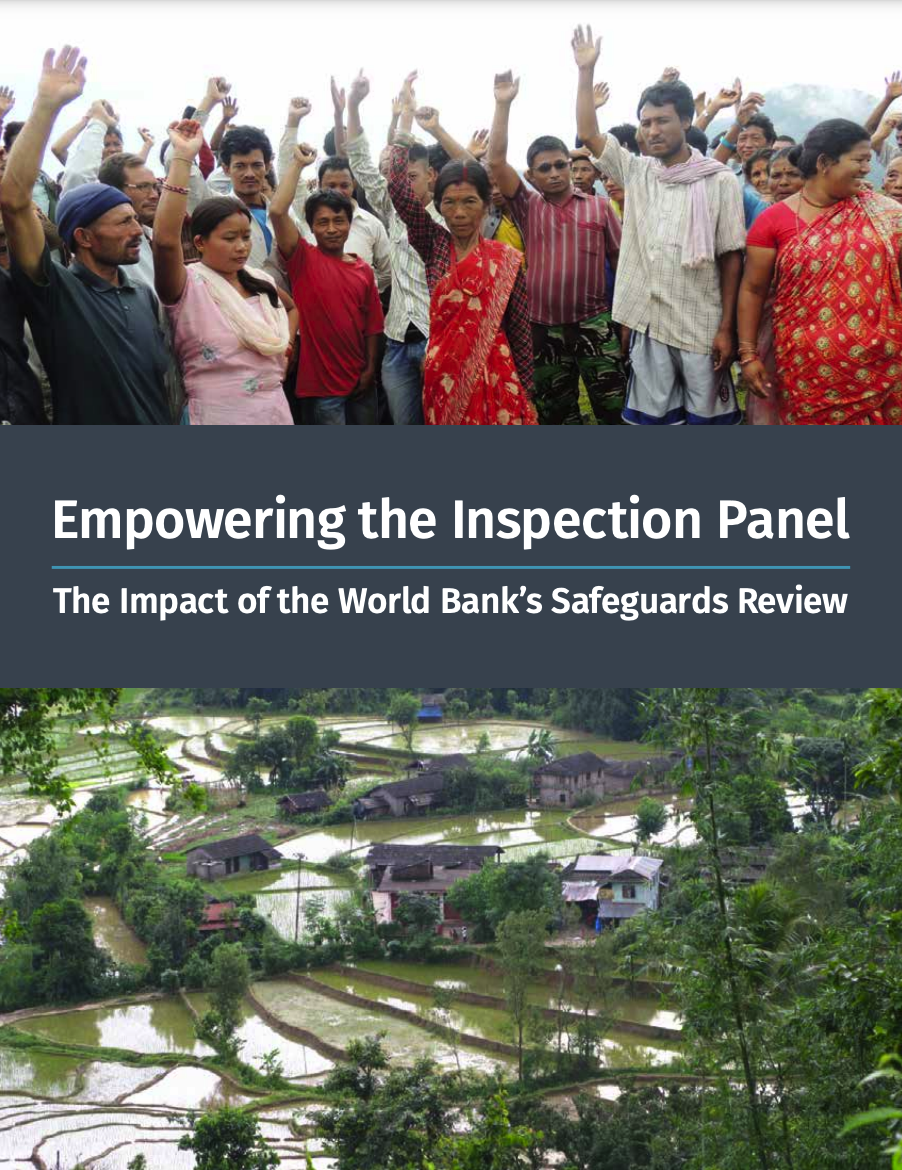
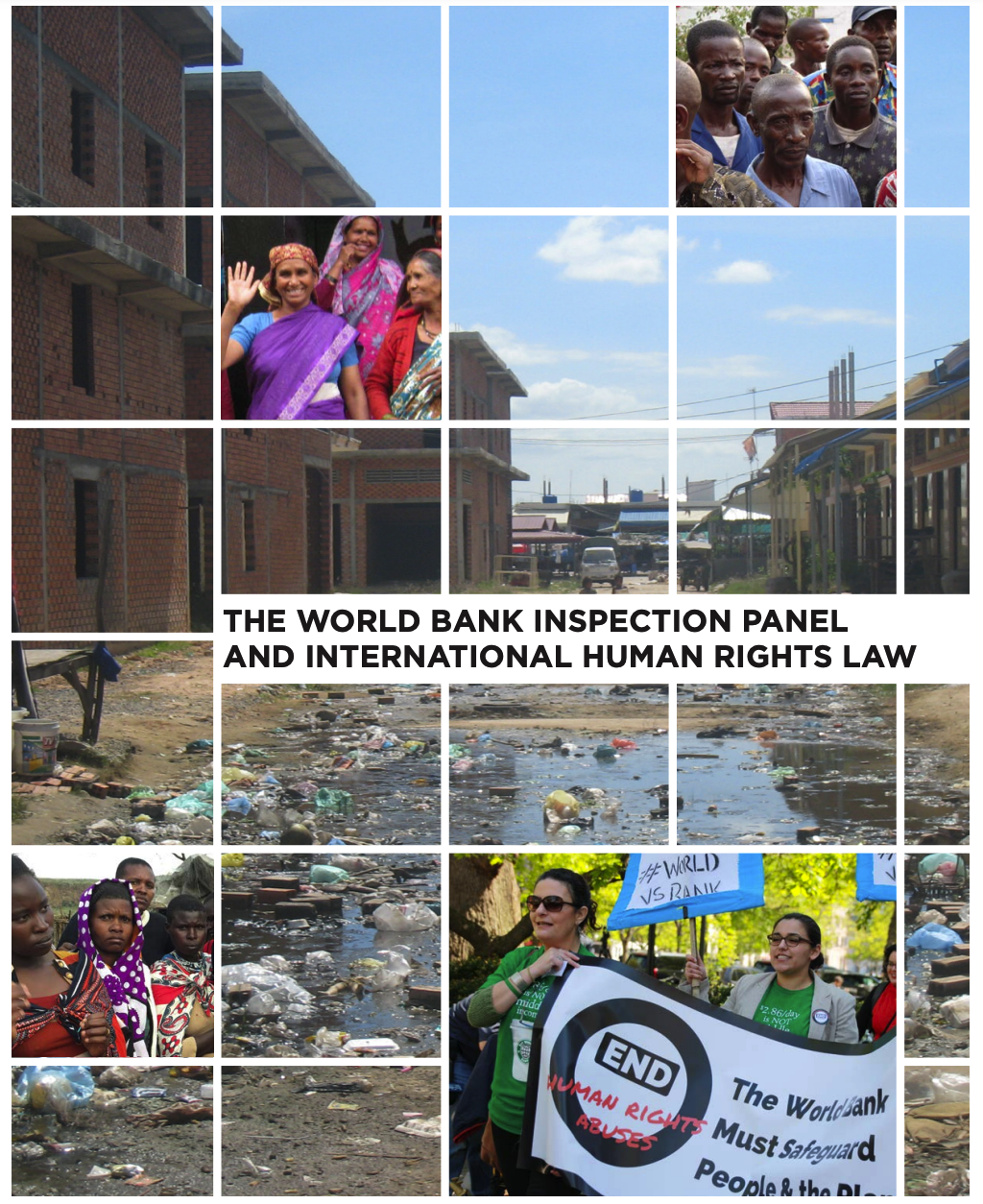


In prior years, the clinic examined the emerging engagement of the IMF with social protection and its impact on national policies, worked with a UN agency on promoting a global accountability mechanism for the post-2015 sustainable development process, advised a major development bank on the need to adapt its accountability institution/complaints mechanism to the changing international development environment, and assisted an international organization to think about ways to promote and regulate the global sharing of information related to viruses with pandemic potential. More information about prior projects and selected reports are available on the IILJ website.
